
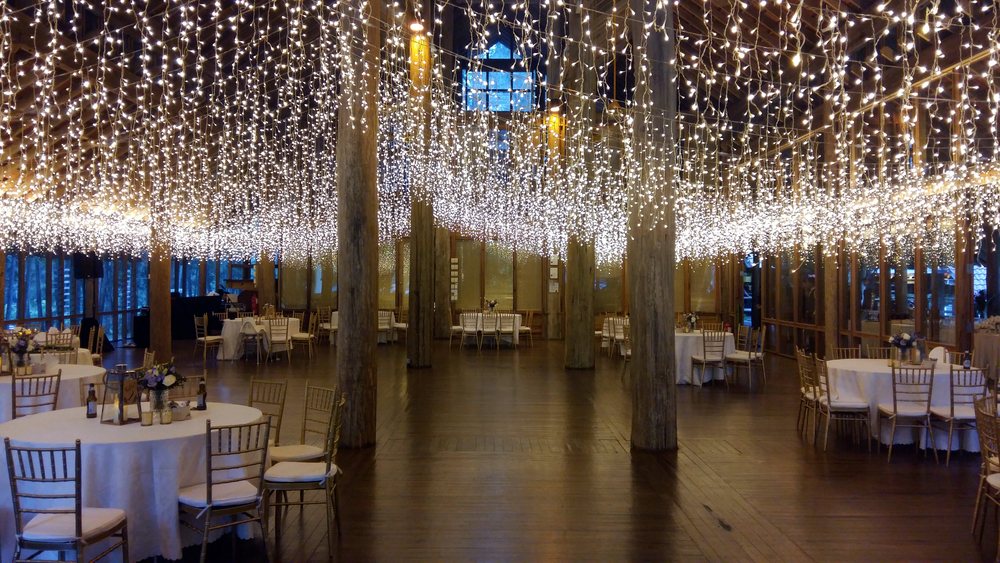
As the 2025 wedding season unfolds, lighting continues to prove itself as one of the most important design and functional elements of a celebration. Beyond aesthetics, the right lighting ensures your event transitions smoothly from day to night while creating the perfect atmosphere for unforgettable moments.
How Lighting Sets the Mood
Lighting is more than a practical necessity—it’s a design tool that shapes the emotional feel of your wedding. From fairy lights draped across trees to festoons warming a barn ceiling or a spotlight highlighting your first dance, each choice sets a tone and creates lasting memories.
Even the most beautifully decorated venue won’t shine without the right illumination. Lighting highlights your décor, enhances your venue’s architecture, and directs attention where you want it—whether it’s the ceremony, reception, or dance floor.
With hotels and barns now among the most popular venues, professional lighting is especially important for drawing out architectural beauty and making large spaces feel intimate and inviting.
Budgeting for Wedding Lighting
To make lighting both effective and affordable, consider these guidelines:
- Start early: Build lighting into your plans from the beginning rather than leaving it as an afterthought.
- Allocate 5–8% of your total budget: This amount typically covers a comprehensive setup that enhances your venue.
- Prioritize key areas: Focus on spaces where guests gather most and where photos will be taken.
- Account for the season: Winter weddings usually require more artificial lighting than summer ones.
- Book in advance: With more couples planning two-day weddings, lighting providers are in high demand during peak season.
Making Smart Lighting Choices
Couples are increasingly personalizing their weddings, and lighting trends are shifting to match.
- Sustainability matters: With 25% of couples opting for eco-conscious choices, energy-efficient LED lighting is more popular than ever.
- Flexible atmospheres: Outfit changes (now common in 23% of weddings) are complemented by lighting that shifts from formal ceremony to relaxed dinner to high-energy dance floor.
- Tradition with a twist: As fewer couples include traditional moments like bouquet tosses, bespoke lighting helps highlight the new personal touches you choose to include.
Planning Your Wedding Lighting
A thoughtful strategy ensures your lighting works seamlessly with your venue, décor, and schedule:
- Visit your venue at the same time of day as your wedding to gauge natural light.
- Coordinate with your photographer to ensure lighting enhances photos.
- Confirm your venue’s rules on attaching fixtures.
- Plan for outdoor setups with generators if necessary.
- Create a timeline for adjusting light intensity or color as your event progresses.
Combining Creativity with Functionality
The best wedding lighting balances beauty with practicality:
- Understand your venue: Large spaces may call for dramatic installations, while intimate ones work well with simpler touches like uplighting.
- Adapt to timing: Dimmable lights provide flexibility as the event shifts from dinner to dancing.
- Mix and match styles: Fairy lights, lanterns, chandeliers, and candles can be layered for a unique look.
- Plan photo opportunities: Ensure your lighting highlights key moments and enhances every shot.
- Seek expert advice: Professionals can help you design a setup that’s both stunning and efficient.
Conclusion
Wedding lighting in 2025 is about creating atmosphere while supporting function. By budgeting strategically, planning with your venue in mind, and blending creative ideas with practical considerations, you’ll design a celebration where every moment is illuminated beautifully.