
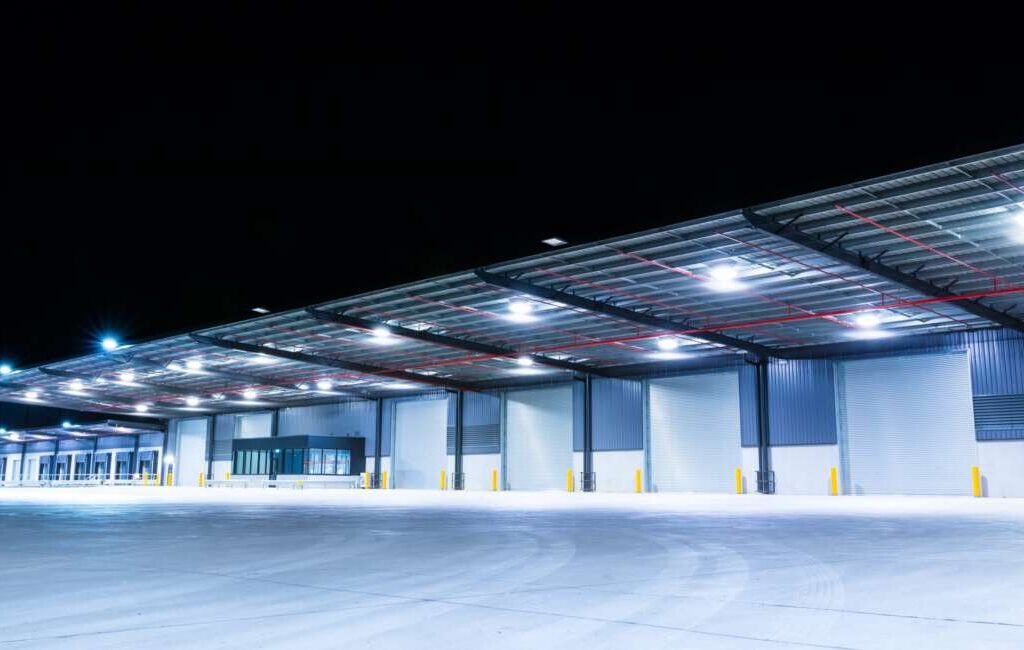
Protective lighting is one of the most practical and cost-effective ways to strengthen industrial security. By increasing visibility in high-risk scenarios and supporting security functions like surveillance and patrols, it forms a reliable layer of defense in any facility’s security system.
The Basics of Protective Lighting
Protective lighting—sometimes referred to as security lighting—comes in many forms, from emergency fixtures to moveable searchlights. While their applications vary, they share one common goal: enhancing facility security.
When planning a protective lighting system, it’s essential to tailor the design to your site’s operations, location, and threats. Still, there are universal principles worth keeping in mind:
- Facilitate clear observation of the site
- Conceal security personnel while they observe
- Use less intensity than standard working lights
- Consider the backdrop (light or dark surfaces)
- Employ contrast so intruders stand out
- Illuminate perimeters, boundaries, and structures
- Combine lighting with alarms and other security systems
- Design for redundancy so a single failure doesn’t compromise coverage
Types of Protective Lighting
Protective lighting strategies can be combined depending on your facility’s layout and risk profile.
1. Standby Lighting
Stationary fixtures remain off until triggered by timers or motion sensors. This approach conserves energy and delivers light only when needed.
2. Continuous Lighting
The most common type of security lighting, fixtures stay on from dusk to dawn. This ensures no area is ever fully dark—particularly effective in outdoor and perimeter applications.
3. Emergency Lighting
A backup system that activates during power outages. Emergency lights often mirror existing setups but rely on alternative power sources like generators or batteries.
4. Moveable Lighting
Portable or fixed searchlights that can be manually or remotely controlled. These are usually used to supplement other strategies, offering flexibility in high-risk or temporary situations.
5. Controlled Lighting
A variation of continuous lighting that restricts projection to a defined area outside the perimeter. This minimizes unnecessary light spill.
6. Surface Method Lighting
This method emphasizes illuminating building surfaces and structures—an approach commonly seen in residential or mixed-use areas.
7. Area Lighting
Broad coverage designed for open spaces such as yards, parking lots, or storage facilities. Area lighting ensures maximum visibility across wide zones.
Beyond Lighting: Strengthening Industrial Security
Lighting is powerful but incomplete on its own. For a comprehensive security strategy, it should work in harmony with other measures.
Implement Alarm Systems
Modern alarms range from access control to environmental monitoring. Many now integrate with law enforcement for rapid response, providing another layer of deterrence.
Hire Security Guards
On-site personnel add adaptability and judgment that technology alone cannot replicate. Cost-effective options now include off-duty or prior law enforcement officers, either armed or unarmed, depending on site requirements.
Use Video Surveillance
Surveillance cameras deter crime, provide valuable evidence, and enhance situational awareness. Remote video monitoring extends this even further, offering:
- 360-degree coverage with mobile camera units
- Rapid deployment with rugged mobile surveillance trailers
- Active monitoring by off-site professionals for real-time response
- Archived footage to protect against legal and insurance liabilities
Conclusion
Protective lighting is a cornerstone of industrial security, offering visibility, deterrence, and support for surveillance systems. By blending continuous, standby, emergency, and specialized lighting strategies with alarms, guards, and video surveillance, facilities can build layered defenses that are cost-effective, reliable, and resilient.
The goal is not just to illuminate—it’s to deter, detect, and defend.